Introduction
Horse parasite control has changed. With large strongyles now largely controlled, the small strongyles have become the central concern — and modern programs focus on the individual horses that actually drive infection, rather than treating every horse on a calendar.
The worms that matter most
- Small strongyles (cyathostomins) — by far the most prevalent and important worms of horses today. They live in the large intestine and can encyst in its wall; a mass emergence of these encysted larvae (larval cyathostominosis) is uncommon but can be fatal. Disease is mainly seen in younger horses.
- Large strongyles (Strongylus vulgaris and relatives, the “bloodworms”) — historically devastating because they migrate through the blood vessels, now rare thanks to decades of deworming, but serious where present.
- Ascarids / roundworms (Parascaris equorum)— a key parasite of foals and weanlings, capable of causing ill-thrift and gut impaction; resistance to the mectins is a growing concern.
- Tapeworm (Anoplocephala) — associated with certain colics.
- Pinworm (Oxyuris equi) — causes tail-rubbing and irritation around the tail.
Foals also face the threadworm (Strongyloides westeri), and bots, summer-sore worms and lungworm feature in some situations.
Who is most at risk
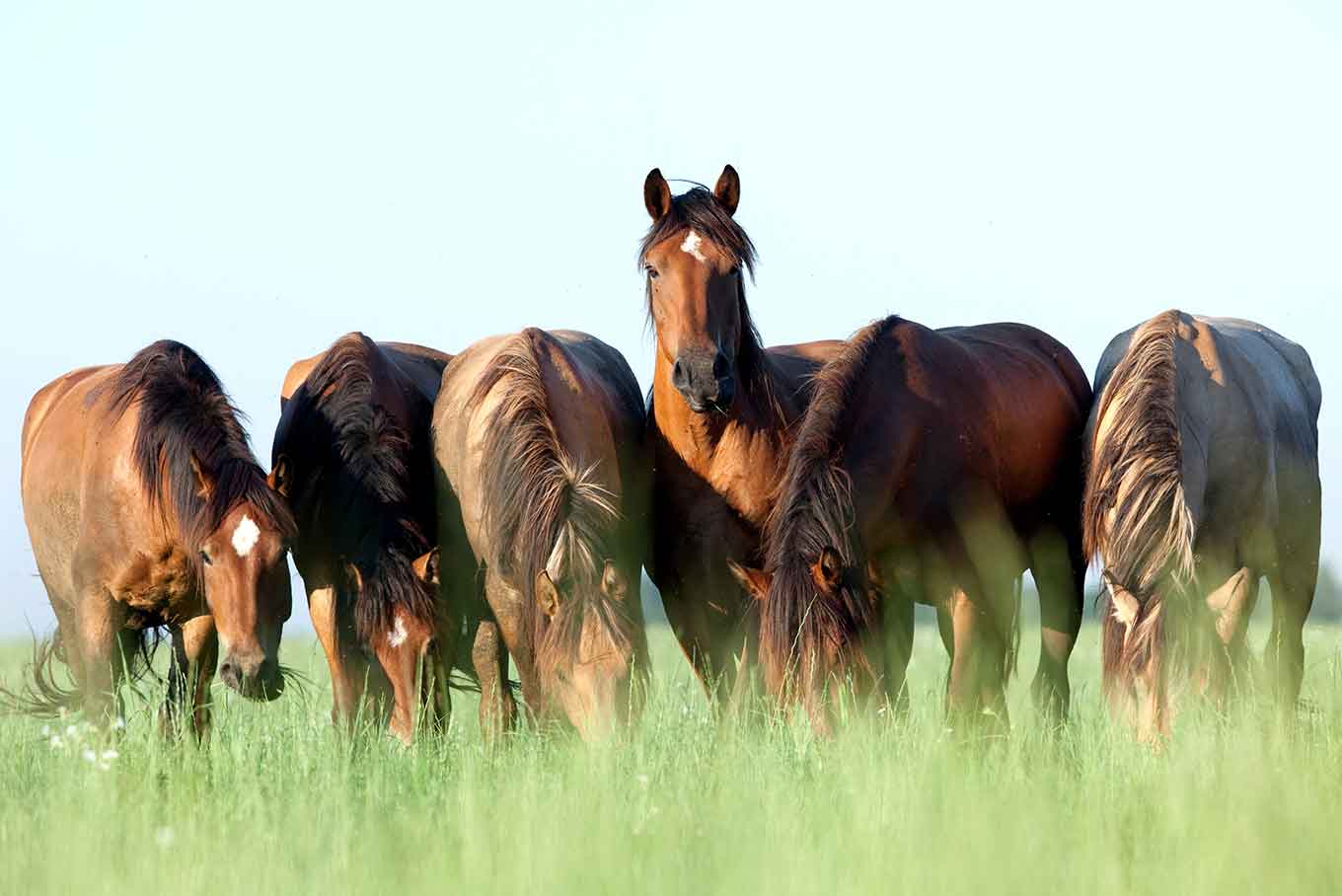
Foals and young horses carry the highest risk, as their immunity is still developing. Among adult horses, egg shedding is very uneven — a minority of horses shed the majority of the eggs — which is why testing individuals is so useful.
Parasite Management for Horses
The old routine of deworming every horse on a rotating calendar is now recognised as a key driver of resistance. Today’s approach is targeted: test first, treat the horses that need it, and lean hard on pasture hygiene.
Test before you treat
Use faecal egg counts to identify which adult horses are the high shedders and to check that your dewormers still work (an egg count reduction test). Bear in mind egg counts have limits — they don’t detect encysted small-strongyle larvae, and they under-read tapeworm and pinworm — so combine them with veterinary advice and, where needed, additional tests. Foals and young horses need their own, more structured program (especially for ascarids).
Mind resistance
Small strongyles are widely resistant to the older white drenches and to pyrantel, and resistance to the mectins is emerging (along with shorter periods before eggs reappear). Ascarids in foals are often resistant to the mectins, and pinworms increasingly so. Knowing the resistance picture on your own property — by testing — is essential.
Manage the pasture
Pasture hygiene does much of the heavy lifting in horses. Removing dung from paddocks (twice weekly is highly effective), avoiding overstocking, rotating or cross-grazing with ruminants, and composting manure all reduce the larvae horses pick up. Reducing those larvae also reduces how often you need to reach for a dewormer — see Using BioWorma in Horses.
Using BioWorma in Horses
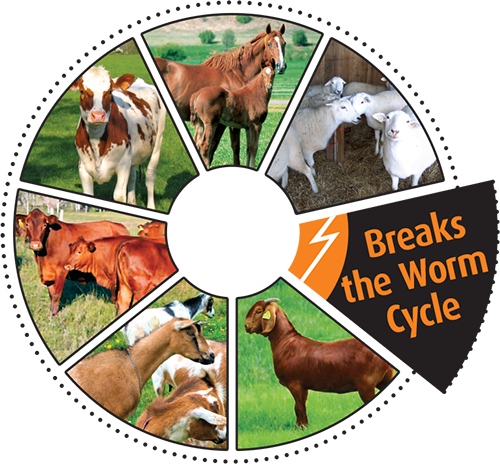
Horses are an excellent fit for biological control. They are often kept on the same paddocks year-round where larvae accumulate, and dung removal is labour-intensive. In the company’s trials, BioWorma reduced worm larvae on pasture by an average of around 84% in horses — the highest of all the species tested.
What it does
Fed daily, the natural fungus Duddingtonia flagrans passes through the horse in its tough spore form and germinates in the manure, where it traps and consumes worm larvae — including drench-resistant larvae — before they reach the pasture. In horses it targets the larvae of the strongyles (both small strongyles/cyathostomins and large strongyles), the stomach hair worm, ascarids, threadworms and pinworms as they develop in the dung.
How it’s fed
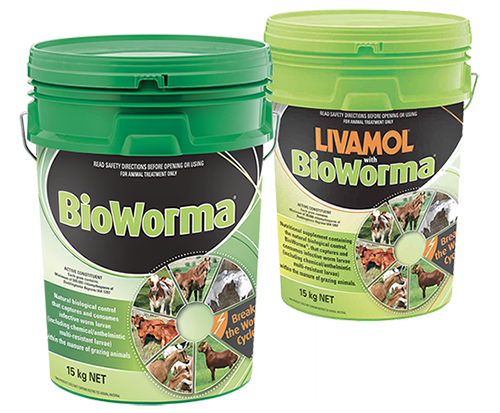
It is fed every day, scaled to bodyweight. Livamol with BioWorma is a popular choice for horses — a palatable protein supplement that can be top-dressed over the normal feed — while the concentrated BioWorma additive can be mixed into feed. Because the fungus doesn’t establish on the property, it needs continuous feeding through the risk period, and is best used strategically when conditions favour larval development (temperatures above about 5°C).
How it fits
BioWorma reduces reinfection from pasture; it does not kill the worms already inside the horse — including encysted small-strongyle larvae — so it complements rather than replaces a targeted deworming program and good pasture hygiene. It does not control lungworm, bots or tapeworm, which aren’t picked up as larvae from the dung. Used alongside faecal-egg-count-led deworming and dung management, it lowers the larval challenge without adding selection pressure for resistance, and it’s residue-free and safe for the dung beetles and soil life that help break down manure.
Animals Overview