Introduction
Ascarids — large roundworms of the species Parascaris equorum — are among the most important parasites of foals and young horses. They are some of the largest worms a horse will carry, and in heavy infections they can be life-threatening. Older horses usually develop immunity, so this is very much a young-horse disease, with its own distinctive lifecycle and, importantly, a drug-resistance pattern that runs opposite to the strongyles.
Overview — What are ascarids in horses?
Ascarids are large roundworms — Parascarisequorum — that live in the small intestine of horses. The adults are striking: pale, pencil-thick worms that can grow up to around 40–50 cm long.They are primarily a problem of foals, weanlings and yearlings, whose immune systems are still developing; most horses build solid immunity by somewhere between six and eighteen months of age, after which burdens fall away.
Why young horses?
During that first year of life, ascarids are one of the most damaging parasites a foal will face. Unlike many worms they don’t attach to the gut wall to feed — instead the adults compete with the foal for nutrients, and the migrating larvae damage the liver and lungs on their way to the intestine. In heavy infections the sheer mass of large worms can physically block the small intestine.
The persistent egg
The feature that shapes everything about ascarid control is the egg. Female worms produce enormous numbers of sticky, thick-shelled eggs that can survive for years in the environment and resist most disinfectants and weather. This means contamination accumulates on foaling paddocks and in stables season after season, and explains why hygiene and paddock management are central to control.
Ascarids — Clinical Signs
Ascarid disease is seen almost entirely in foals and young horses. The signs reflect both the migrating larvae and the adult worms:
- Poor growth and ill-thrift, a rough coat, and a pot-bellied appearance.
- Coughing and nasal discharge as the larvae migrate through the lungs.
- Depression and reduced appetite.
- Colic, and in heavy infections impaction or even rupture of the small intestine, which can be fatal.
The deworming danger
A particular risk deserves emphasis: when a foal carrying a heavy burden of ascarids is given a fast-acting wormer, the sudden death of a large mass of worms can block the small intestine, causing serious colic. The classic case is a recently-dewormed foal around five months of age. This is why heavy burdens are handled carefully, often with veterinary guidance and a slower-acting product.
Diagnosis note: A faecal egg count is useful in foals, but it will read negative during the early larval stage— before the worms mature — so a clear sample doesn’t rule out a developing infection. Combine egg counts with the foal’s age, history and clinical signs.
Ascarids — Lifecycle Summary
Ascarids have a direct lifecycle, but one with a dramatic migration through the foal’s body and an exceptionally hardy egg.
- Adults in the small intestine produce hugenumbers of sticky, thick-shelled eggs, which pass out in the dung.
- On the ground, each egg develops an infectivelarva inside the shell over about two weeks. The egg itself is theinfective stage — and it can survive for years and resist most disinfectants.
- The foal swallows the eggs from contaminatedpasture, feed or surfaces.
- The larvae hatch and migrate: from the intestinethrough the liver and then the lungs, where they are coughed up and swallowedagain — the journey that causes the coughing and nasal discharge.
- Back in the small intestine the larvae matureinto adults, around ten to twelve weeks after the eggs were eaten, and beginshedding eggs of their own.
Two points drive ascarid control. First, because the infective stage is a tough egg rather than a free-living larva on the grass, the parasite isn’t cleared from the environment by the weather or pasture spelling the way many worms are. Second, that same egg accumulates in foaling areas year after year — so the foals most at risk are often infected from ground contaminated by previous foal crops.
Ascarids — Treatment & Resistance Summary
The single most important thing to know about treating ascarids is that their resistance pattern is the mirror image of the strongyles — so the wormer you reach for is often different.
The resistance reversal
Ascarids have developed widespread resistance to the macrocyclic lactones (abamectin, ivermectin and moxidectin) on breeding farms around the world — to the point that resistance should be assumed until proven otherwise. By contrast, the benzimidazole (“white”) drenches such as fenbendazole and oxfendazole, and morantel, often remain effective against ascarids. As always, a faecal egg count reduction test confirms what works on a given farm.
Treat heavy burdens carefully
Because a sudden kill of many large worms can block the gut, foals with heavy burdens are treated cautiously— often with a slower-acting product and veterinary guidance — to reduce the risk of impaction colic. Treating foals before burdens become heavy avoids this problem.
Foal programs
Ascarid control is built around the foal. Treatment is generally started in the first couple of months of life and repeated through the first year, with the product chosen on the basis of local resistance testing. Because egg counts miss the early larval stage, timing is guided by the foal’s age and history as well as test results, ideally as part of a vet-designed program.
Ascarids — Prevention Summary
Because the ascarid’s infective egg is so tough and so long-lived, prevention leans heavily on hygiene and paddock management rather than on the environment clearing itself.
- Don’t reuse contaminated ground for successive foal crops. Rotate which paddocks nursing mares and foals use from year to year, so each foal crop isn’t grazing ground seeded by the last.
- Keep foaling areas clean. Remove manure frequently and keep stables and yards as clean as practical — though remember the eggs resist most disinfectants, so physical removal and steam are more reliable than chemicals.
- Monitor foals with faecal egg counts and follow a vet-designed deworming program tailored to your farm’s resistance picture.
- Manage the mare around foaling as advised, to reduce the contamination foals are exposed to.
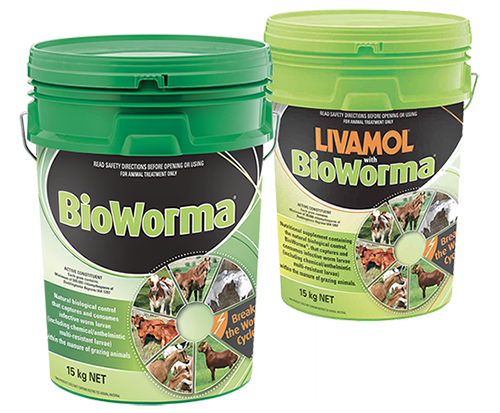
Where biological control fits: Biological control with BioWorma is fed across the horse program to reduce worm larvae in the manure — most relevantly the strongyle larvae that young horses also carry. For ascarids specifically, the infective stage is a hardy egg rather than a larva developing in the dung (much like the thin-necked intestinal worm), so ascarid prevention rests mainly on hygiene, paddock rotation and targeted foal deworming.

Frequently asked questions
Common questions about ascarids (roundworms) in horses — which horses get them, the symptoms in foals, the impaction risk, treatment, resistance and how long the eggs survive.
What are ascarids in horses?
Ascarids are large roundworms — Parascaris equorum — that live in the small intestine. They can grow up to around 40–50 cm long and mainly affect foals and young horses, whose immunity is still developing. Most horses become immune by six to eighteen months of age.
Which horses get ascarids?
Almost entirely foals, weanlings and yearlings. Older horses usually develop strong immunity, so adult horses rarely carry significant ascarid burdens — which is why ascarid control is built around young stock.
What are the symptoms of ascarids in foals?
Poor growth and ill-thrift, a rough coat and pot belly, coughing and nasal discharge as the larvae migrate through the lungs, and reduced appetite. In heavy infections the worms can block the small intestine, causing colic that can be life-threatening.
Can ascarids kill a foal?
Yes, in heavy infections. A large mass of worms can impact or even rupture the small intestine. The risk is highest when a foal carrying a heavy burden is given a fast-acting wormer and many worms die at once — which is why heavy burdens are dewormed carefully, often with veterinary guidance.
How are ascarids treated, and which wormer is best?
Their resistance pattern is the opposite of the strongyles: ascarids are now widely resistant to abamectin, ivermectin and moxidectin, while the white drenches (such as fenbendazole andoxfendazole) and morantel often still work. The right choice depends on your farm’s resistance testing, so confirm with a faecal egg count reduction test and your vet.
How long do ascarid eggs survive in the environment?
For years. The eggs are sticky and thick-shelled, resist most disinfectants, and persist on paddocks, in stables and on surfaces season after season. This durability is why hygiene and rotating foaling paddocks matter more than pasture spelling for ascarid control.
How do I prevent ascarids?
Avoid grazing successive foal crops on the same contaminated ground, keep foaling areas physically clean (the eggs resist chemicals, so removal and steam work best), monitor foals with egg counts, and follow a vet-designed foal deworming program suited to your farm’s resistance picture.